The important question is not only where to attack, but what your network will look like afterwards.
Battles built around connections
Each battlefield is a network of stations and lanes. Drag from your station to a valid target, or select your sources and tap a hostile or unclaimed target. Drone groups follow those connections. They do not jump freely to any point on the screen.
A capture can provide production, a reinforcement route or a new approach to an enemy. It can also create a position that is hard to defend. The shape of the network gives each visible drone count a context.
Portrait controls, meaningful commitments
Sector Clash is designed for a phone held in portrait orientation. Station commands are at the center of the controls: tap to select, combine sources towards one target, and drag to reinforce friendly positions.
A simple gesture can have a complicated consequence. A distant fleet may arrive late. Sending from a frontier station can expose it to a counterattack. Giving the command takes a moment; learning to read the position it creates is the strategic part.
Three categories make one loadout
Choose one module for each of the Station, Fleet and Production categories from a collection of nine cards. Different choices emphasize movement, capture strength, production or capacity. Your collection and your active loadout are separate: cards in the same category do not all provide their bonuses together.
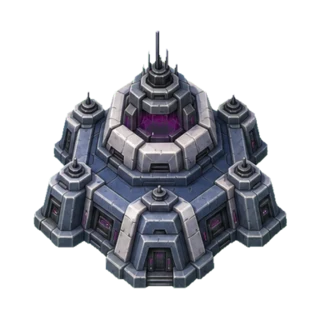
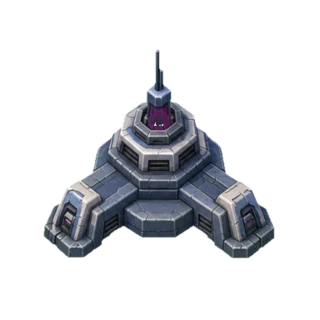
Station roles add another layer. Factory and Relay offer production opportunities, Shield is harder to capture, Booster supports network production, and Jammer pressures connected hostile stations. Consider what a module affects as well as its upgrade level.
Campaign, Rival League and Friend Duel
Campaign is the main route for local progression against AI. The first 200 operations take that network battle through different space environments and layouts. Campaign progress is stored on the device; it should not be treated as an account-based cloud backup.
Rival League offers asynchronous competition using stored rival profiles. It is not a live PvP match against an opponent who must be online at the same time. Friend Duel is a separate invitation and readiness flow that requires compatible versions on both devices. The modes have distinct connection and progression rules.
Who might enjoy it?
If you enjoy taking territory, finding routes and protecting production sites, the station-capture loop may appeal to you. A retry gives you concrete decisions to reconsider: the opening target, an attack’s timing or the position you chose to defend.
Explore the controls in the beginner’s guide and learn the station roles in the Game Guide. Visit the store for your device to explore the full game.
A useful place to start
Make your first goal manageable: expand while keeping a defensible position behind the attack. Then look at how your three equipped cards change the choices available to you. Understanding one command and one tactical decision is a better starting point than rushing between every mode.
The beginner’s guide explains the controls and first-battle rules. The station tactics guide develops the questions to ask before sending a fleet. Watch what your commands actually change on the map as you learn.
Questions, answered
Is Sector Clash a city-building game?
The main battle loop is about sending drones across connected routes and capturing stations. The strategy described here focuses on that network battle.
Is Rival League live multiplayer?
No. It is asynchronous competition with stored profiles. Friend Duel is a separate mode with its own invitation and readiness flow.
Where should I start learning the first battles?
The beginner’s guide explains the controls and early battle decisions. The Game Guide introduces station roles and drone rules on their own pages.